
How In-Vehicle Computing Is Reshaping Public Transit: A Complete Solution Guide
2026/09/28
Public transit is entering a new era of digital mobility. Modern transit networks must become connected, intelligent, and data-driven to meet rising passenger expectations. Automation, artificial intelligence, and real-time digitalization have become top priorities for transit operators worldwide. At the center of this transformation, robust in-vehicle computing serves as the critical onboard intelligence hub. It unifies safety-critical edge processing, telematics, and passenger services into a cohesive architecture. By integrating high-performance computing with modern multimedia displays, it helps transit operators build safer, more responsive, and highly efficient transport networks.
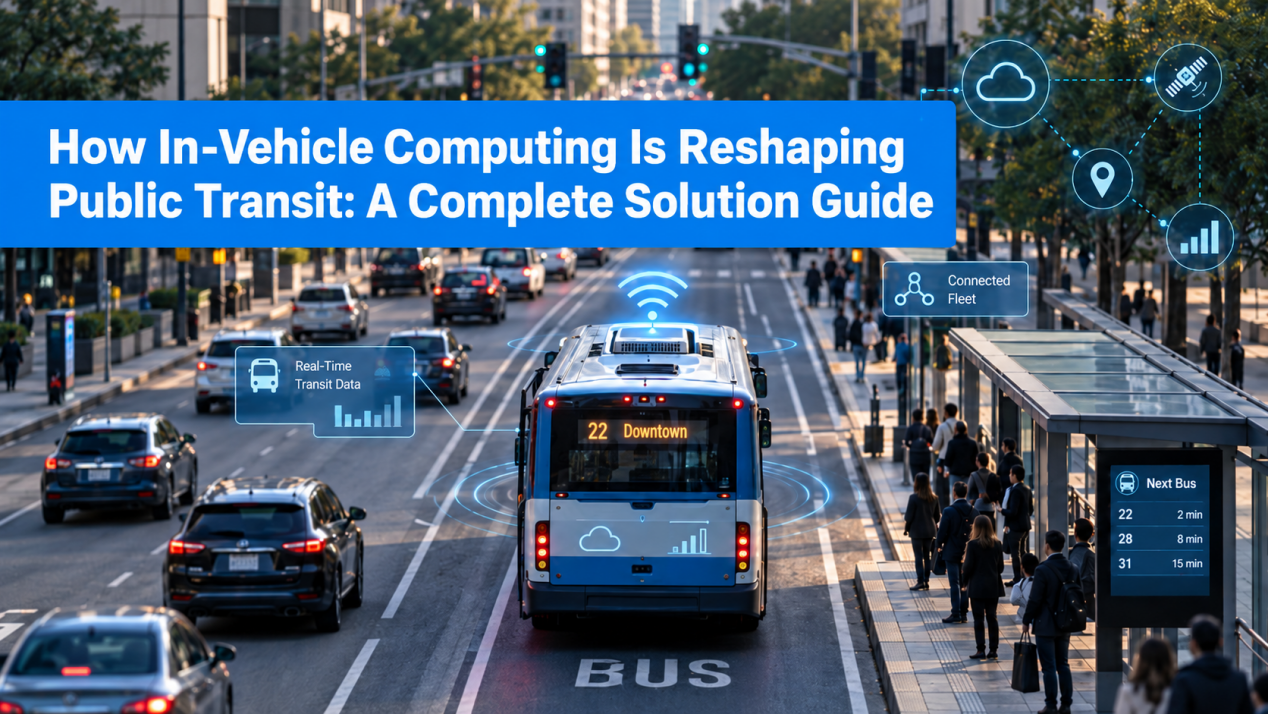
Key Challenges in Modern Fleet Operations
Modern public transit vehicles support many digital services while operating in demanding environments. This creates several challenges for fleet operators and system integrators.
1. Severe Environmental Rigors: Public transit fleets encounter punishing physical environments every day. Daily operations subject onboard systems to constant road vibration and sudden mechanical shocks. Vehicles also navigate severe temperature swings. Meanwhile, vehicle electrical systems deliver dirty, fluctuating power during engine ignition and battery charging. These continuous physical and electrical stresses degrade electronic components over time. They compromise overall system reliability and substantially raise the risk of sudden hardware failure.
2. Complex Multi-Service Networking: A modern connected bus integrates cameras, passenger displays, controllers, sensors, fare terminals, and cloud applications. These diverse devices rely on different hardware interfaces and communication protocols. Integrating these subsystems creates severe network bottlenecks. Operators struggle to balance dynamic bandwidth allocation with strict latency control.
3. Fragmented Content Management: Passenger route updates, emergency alerts, and commercial announcements require continuous synchronization. In many fleets, infotainment displays run on isolated media players. Maintenance teams must update route tables and advertising media manually or across fragmented software tools. This separation increases administrative overhead and limits real-time responsiveness.
4. High Maintenance Costs: Managing distributed equipment across hundreds of transit vehicles is challenging. Traditional operations lack centralized visibility into device health, temperature levels, and connection status. Technicians must service vehicles manually in the depot. Upgrades to firmware or diagnostics require physical access, which drives up labor costs and slows down critical security updates.
How In-Vehicle Computing Supports Connected Transit
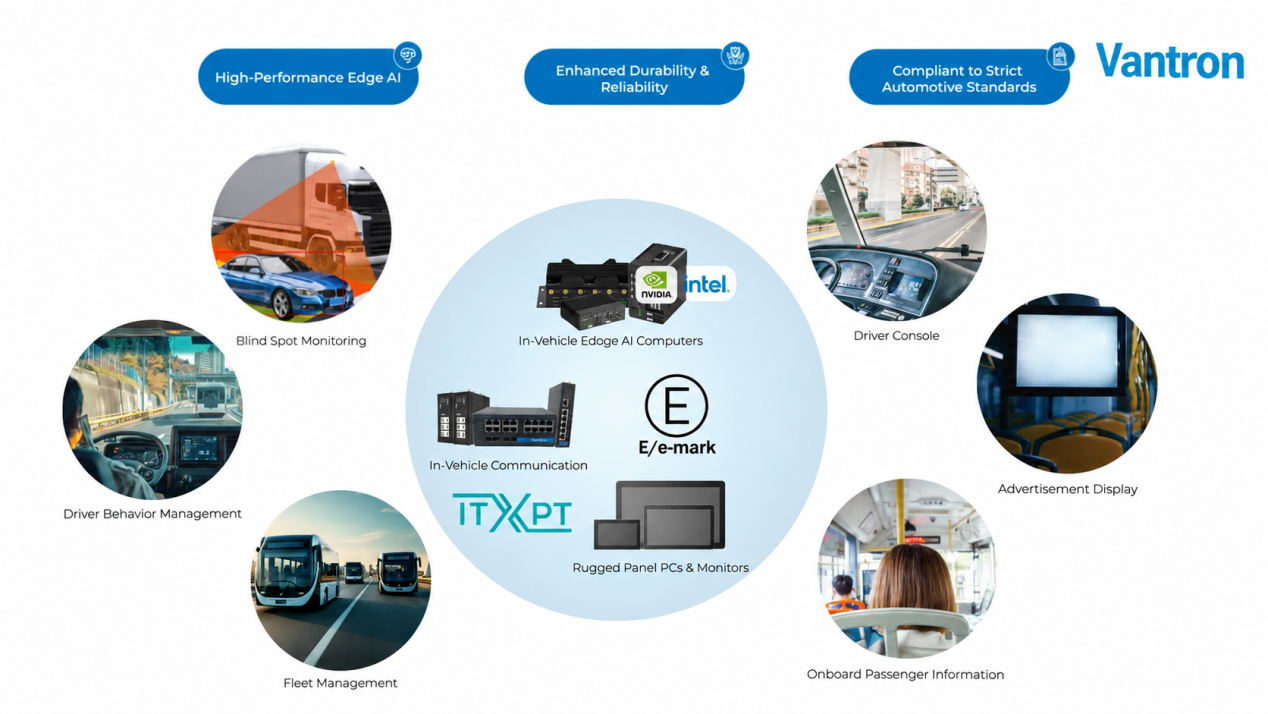
A well-designed in-vehicle computing architecture brings computing, communication, and passenger services together in a structured platform. Vantron’s transportation solution combines rugged in-vehicle computers, gateways, and displays to support public transportation applications. The architecture is designed to separate safety-related edge computing from multimedia passenger services while maintaining connectivity across the vehicle.
1. Edge AI for Proactive Driving Safety: Safety remains the highest operational priority for fleet operators. Dedicated edge AI processors run real-time machine vision workloads directly on the vehicle. Systems connect with Advanced Driver Assistance Systems (ADAS) and Driver Monitoring Systems (DMS). They instantly detect driver fatigue, lane departures, and blind-spot pedestrians without relying on cloud latency. Immediate local alerts allow drivers to take corrective action and avoid collisions
2. Multi-Network Connectivity for Connected Fleets: A connected transit vehicle functions as a mobile data center. High-speed cellular modems, GNSS receivers, and local wireless networks ensure continuous cloud and depot synchronization. The onboard vehicle communication system handles vehicle telemetry, automated fare transactions, and live operational updates. At city intersections, secure vehicle-to-everything (V2X) links coordinate signal priority to reduce travel times. Together, these unified data streams empower modern fleet management technology with reliable real-time visibility.
3. Passenger Information and Onboard Infotainment: Dedicated hardware video decoders drive high-definition route maps and audio announcements. Operators can combine real-time arrival estimates with commercial multimedia content. Delivering responsive in-vehicle infotainment enriches the rider experience while opening new revenue opportunities through digital advertising.
4. Vehicle-Grade Reliability for Continuous Operation: Hardware must withstand tough road conditions. Fanless enclosures prevent dust and moisture ingress. Wide temperature support ensures steady operation during freezing winters and sweltering summers. Built-in ignition sensing and battery protection ensure the computer boots cleanly when the engine starts and shuts down safely after parking.
Key Features of a Reliable In-Vehicle Computing Platform
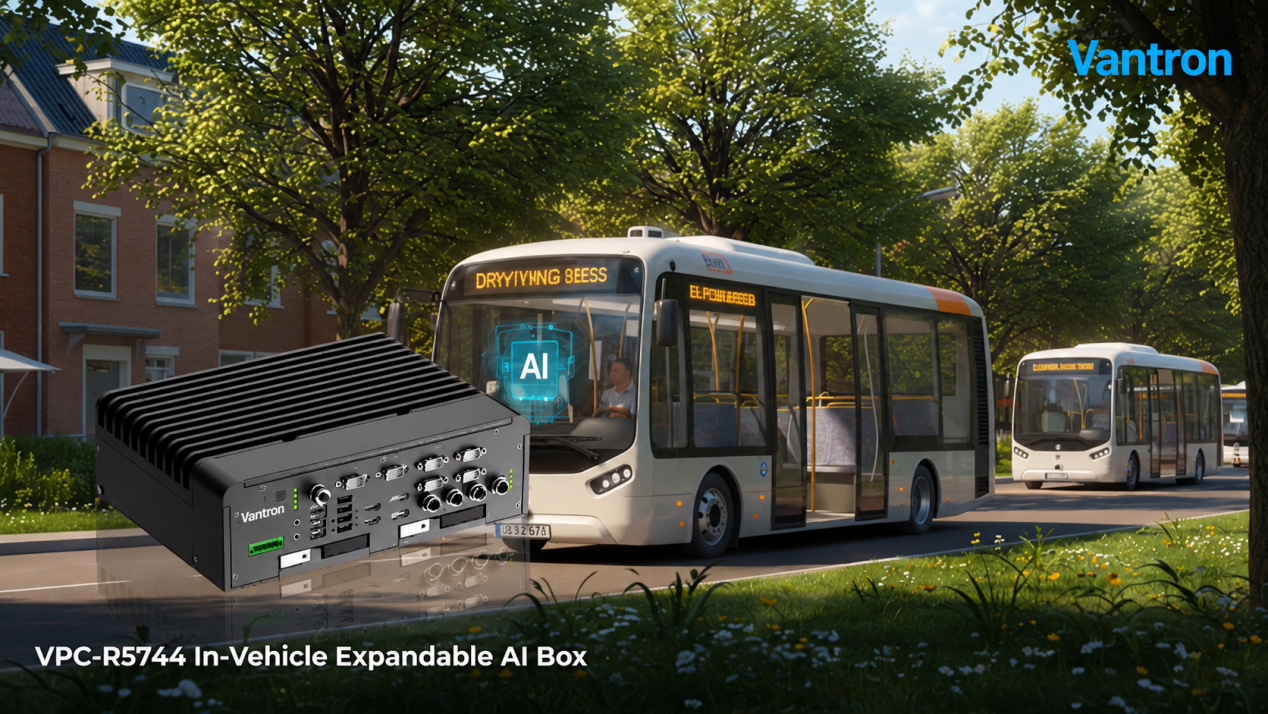
Selecting the right hardware platform is essential for reliable fleet deployment. At Vantron, we engineered the VPC-R5744 expandable in-vehicle AI box PC to serve as a high-performance computing backbone for smart transit.
1. High-Performance Computing, AI, and Video Performance: We provide a computing engine powered by 12th, 13th, and 14th Gen Intel Core desktop processors. The system supports up to 96 GB of high-speed DDR5 memory to handle heavy concurrent workloads. Multiple video outputs, including two HDMI and two DisplayPort interfaces, deliver up to four independent 4K displays. Operators can drive high-resolution passenger displays, route monitors, and driver terminals from a single box PC.
2. Vehicle Interfaces and Multi-Network Connectivity: The VPC-R5744 supports interfaces including CAN RS232/RS485, digital I/O, Automotive Ethernet, and PoE camera connectivity. It also supports GNSS, 4G/5G, and Wi-Fi connectivity. This interface combination enables connections with cameras, vehicle controllers, positioning services, wireless networks, and other onboard equipment. It can also reduce dependence on multiple protocol conversion devices inside the vehicle.
3. Vehicle Power and Environmental Reliability: We designed the platform specifically for the electrical realities of transportation. It supports a wide 9V to 60V DC power input with built-in surge and reverse polarity protection. Intelligent ignition power management coordinates delayed startup and shutdown routines to protect storage disks. The rugged fanless aluminum enclosure supports an operating temperature range of -40°C to 70°C and resists severe road shock and vibration.
4. Standards, Security and Lifecycle Support: Designed to meet rigorous transit standards, the platform is undergoing certification for automotive E-mark (ECE R10, E13), rolling stock EN 50155:2021 / EN 50121-3-2:2015, CE, and FCC. It incorporates a dedicated TPM 2.0 cryptoprocessor to secure vehicle identity, firmware integrity, and sensitive telemetry. For remote fleet maintenance and edge deployment, the system supports Intel Active Management Technology (iAMT), Wake-on-LAN (WoL), and PXE boot with Insyde UEFI BIOS. Backed by industrial-grade longevity commitments, the VPC-R5744 delivers dependable, long-term operational consistency for commercial fleets, transit buses, and special-purpose vehicles.
Summary
Connected public transit requires computing, communication, display, device management, and long-term engineering support to work together as a practical system.
Vantron combines intelligent edge hardware, industrial communication devices, intelligent displays, and remote management capabilities. Our ODM/OEM services also support BSP adaptation, interface customization, mechanical design, certification, manufacturing, and lifecycle management. This provides transportation solution providers with a more integrated path from system design to long-term deployment.
Contact us to discuss a customized onboard computing and connectivity solution for your next public transit project.

Vantron’s one-stop service addresses all complex requests.


